The Short Version
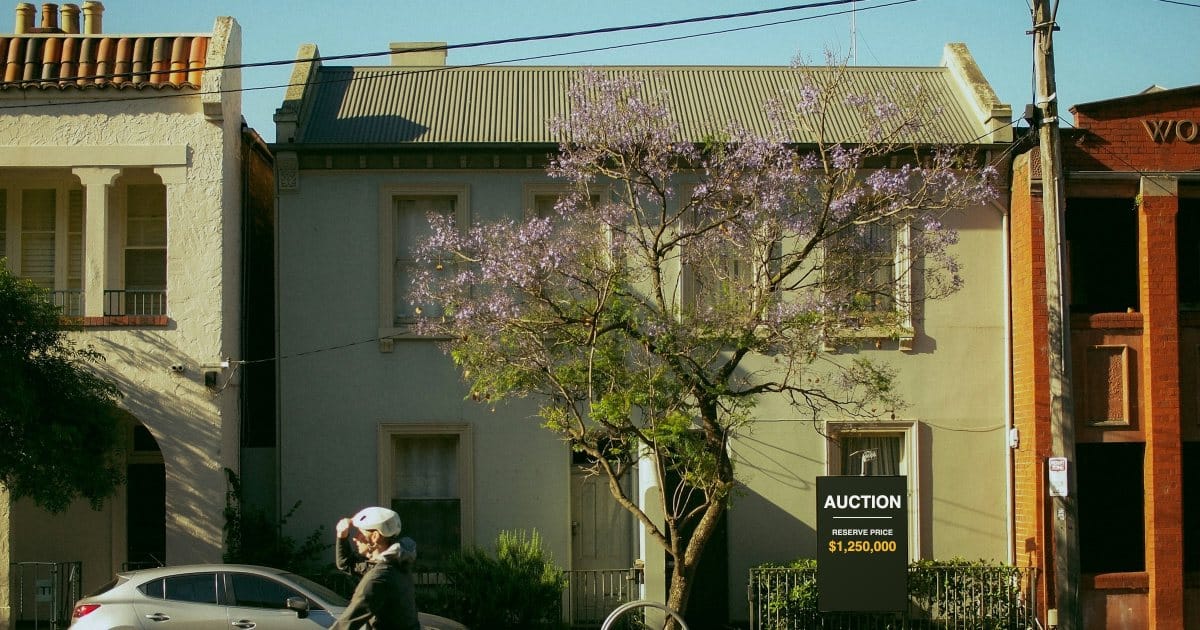
Victoria has become the first Australian state to make agents publish a seller's reserve price before an auction. The rules commenced on 1 October 2026, and they apply to auctions and fixed-date sales held on and from 16 October 2026.
The core requirements, as set out in the Act and by Consumer Affairs Victoria (CAV):
- The agent must ask the seller for their reserve price in writing, proposing a figure and giving reasons for it. The seller confirms a reserve with a signed written response.
- The agent must publish that reserve at least 7 days before the auction or fixed-date sale.
- The reserve must be a single dollar amount, with no "from", "over", "+" or "starting at".
- If the reserve is not published in time, the auction or fixed-date sale cannot go ahead.
- The reserve appears on a new document, the Property Price Statement, which replaces the Statement of Information.
The claim circulating in agency newsletters and on social media is accurate. The detail below is drawn from the legislation itself and from CAV guidance, and the article notes where the two differ in emphasis.
Where The Rules Come From
The changes were made by the Consumer Legislation Amendment Act 2026 (Act No. 36/2026), an omnibus law that amends the Estate Agents Act 1980 among other legislation. The new reserve price rules are sections 47AG to 47AI of the Estate Agents Act. The Bill was tabled on 9 June 2026 and received Royal Assent on 8 September 2026.
The policy was first announced by the Victorian Government in November 2025 as a response to underquoting, the long-running practice of advertising a property below the price the seller will actually accept. The Government's underquoting taskforce had by then issued more than 200 infringements totalling more than $2.3 million, and it is being made permanent.
The Key Dates
| Date | What happens |
|---|---|
| 8 September 2026 | Royal Assent; the Act becomes law |
| 1 October 2026 | Property Price Statement replaces the Statement of Information; sold price rules start |
| 16 October 2026 | Reserve disclosure applies to auctions and fixed-date sales held on or after this date |
| 1 June 2027 | Section 32 vendor statement must be available at least 14 days before auction |
| 1 December 2027 | Agents must also report sale information to the Director of Consumer Affairs Victoria |
The 2027 changes can start earlier if the Government proclaims an earlier date; the dates shown are the latest they can begin.
The 16 October start comes from a transitional provision: the new reserve rules do not apply to auctions or fixed-date sales held within 14 days after 1 October 2026. CAV gives a worked example: an auction held on 16 October 2026 needed its reserve disclosed by 9 October 2026. For a Saturday auction on 17 October, the reserve had to be published by Saturday 10 October at the latest.
What Counts As A Fixed-Date Sale
The rules cover auctions and fixed-date sales, so the definition matters. CAV describes a fixed-date sale as any sale method where the seller sets a date and time by which buyers must make an offer.
The rules do not apply to:
- Commercial property sales
- Private sales without a fixed date
- Sales run directly by an owner without an estate agent
The Property Price Statement
The Property Price Statement (PPS) is the renamed and expanded Statement of Information. According to CAV, it must include:
- An indicative selling price, as a single figure or a range of no more than 10% (for example, $500,000 to $550,000)
- The 3 properties most comparable to the one being sold, or fewer if 3 do not exist
- The suburb median price
- The seller's reserve price, at least 7 days before an auction or fixed-date sale
- Key features of the property and of each comparable: building type, bedrooms, bathrooms, car spaces, internal floor area in square metres and total land size in square metres
The PPS must be available at every open for inspection and displayed prominently on the main online advertisement, next to the advertised price. Physical advertising, such as a signboard or print ad, must carry a web address or QR code linking to it.
Once the agent receives the reserve, any online advertisement showing a price lower than the reserve must be removed or amended. The Act says within one day; CAV describes this as 1 business day. Offline advertising must be dealt with as soon as practicable.
The underquoting rules sit alongside all of this, and the Act now refers to the reserve in them expressly. It is illegal for an agent to advertise or quote a price below the seller's reserve, below a written offer the seller has already rejected as too low, or below the agent's own current estimated selling price.
If The Reserve Changes
The Act does not contain a separate provision about changing a reserve. It requires the seller's reserve to be published for the 7 days immediately before the auction or fixed-date sale, and that requirement does the work.
CAV's guidance spells out the effect: the rule applies to any change to the published reserve, whether the seller raises it or lowers it, and when the published reserve changes, the 7-day period starts again. A change made inside the final week therefore cannot simply take effect on the day. The Real Estate Institute of Victoria raised the absence of a clear mechanism for reserve changes during debate on the Bill.
Pre-Auction Offers
The rules do not stop a sale before auction. CAV's position is that a pre-auction offer is treated as a private sale. It can be made and accepted without the 7-day requirement, and the auction is then cancelled because it is no longer needed, as happens now.
One existing rule is unchanged: in Victoria, a residential purchase made at auction, or within 3 clear business days before or after a public auction, has no cooling-off period. A pre-auction offer accepted in the days just before auction day can fall inside that window.
What The Guidance Does Not Yet Settle
Some questions are not answered in the published CAV guidance at the time of writing, and commentary that states otherwise should be read with caution:
- Passing in. Nothing in the rules forces a seller to sell, and a property can still be passed in if bidding does not reach the reserve. The guidance does not spell out how a sale negotiated after a pass-in is handled.
- Selling below the published reserve. The guidance does not say whether, or how, a seller can accept less than the reserve they published.
- What the figure means. A published reserve is the price at which the seller has agreed the property can sell under the hammer. It is not a valuation, and it is not a prediction of where bidding will finish.
For a definitive position on any of these in a particular sale, the sources are CAV, the agent's written answers, and a conveyancer or solicitor.
Sold Prices Are Now Published Too
From 1 October 2026, the agent must add the sold price to the Property Price Statement within 7 days of the sale becoming unconditional, and keep it published online for at least 18 months. CAV says this applies to off-market sales as well, even where the property was never publicly advertised.
There are two exceptions. A seller, buyer or agent can apply to the Director of Consumer Affairs Victoria within 7 days of the unconditional sale date for an exemption where there are circumstances of family violence or personal violence, or another reason set by regulation. And an agent does not have to disclose the price where the agency agreement was signed before the rule started and contains a term requiring the price to stay confidential.
Penalties
Most of the new obligations, including publishing the reserve, not running an auction without it, removing advertising below the reserve and publishing the sold price, carry a maximum penalty of 240 penalty units. Some CAV pages quote this as "$48,842", which was the value under the 2025-26 penalty unit. The Victorian penalty unit rose to $209.10 on 1 July 2026, which puts 240 penalty units at about $50,184.
The Act also extends the existing profit forfeiture provision, which can strip an agent of commission earned through a breach, to cover failing to publish the reserve and failing to remove advertising below it.
So an agent who runs an auction without the reserve published for the full 7 days commits an offence, and the auction should not have proceeded at all.
Where This Meets Finance
None of these changes alter how lenders assess a loan, and a published reserve is not a bank valuation. Lenders still value the property themselves, and any gap between the purchase price and the lender's valuation still has to be funded from the buyer's own money.
What does change is the information available before auction day. A single published dollar figure, a week out, is a concrete number that sits alongside a pre-approval and the figures from tools such as our borrowing power calculator, mortgage repayment calculator and stamp duty calculator. The absence of a cooling-off period on auction purchases is unchanged, which our earlier piece on auction caution covers in more detail.
If a lending question comes out of any of this, contact us. There is no obligation.
FAQ
When did the reserve price rules start in Victoria?
The reserve price rules commenced on 1 October 2026. The 7-day reserve disclosure requirement applies to auctions and fixed-date sales held on and from 16 October 2026.
Can the reserve be published as a range?
No. The reserve must be a single dollar amount. The indicative selling price on the Property Price Statement may be a range, but that range cannot exceed 10%.
What happens if the agent does not publish the reserve in time?
The auction or fixed-date sale cannot go ahead, and an agent who conducts it anyway commits an offence carrying a maximum of 240 penalty units.
Can the seller change the reserve after it is published?
According to CAV, yes, up or down, but the 7-day period starts again from the change, because the Act requires the reserve to be published for the full 7 days immediately before the sale.
Does this apply to private sales?
Not to private sales without a fixed date. It does apply to fixed-date sales, where buyers must make offers by a set date and time. Pre-auction offers are treated as private sales and can proceed without the 7-day requirement.
Do these rules apply in other states?
No. This is Victorian law only. Other states and territories have their own underquoting rules, and none currently require the reserve to be published before auction.
Official Sources
Please rely on the primary sources rather than this summary:
- Consumer Affairs Victoria - New changes to property sales and underquoting laws
- Consumer Affairs Victoria - Industry Q&As on the new laws
- Consumer Affairs Victoria - Understanding property prices and underquoting for buyers
- Consumer Affairs Victoria - Property sales method and price
- Victorian Legislation - Consumer Legislation Amendment Act 2026
- Consumer Affairs Victoria - Buying property at auction (cooling-off)
- Premier of Victoria - Bringing the hammer down on underquoting (20 November 2025)
- Victorian Government - Penalty unit value from 1 July 2026
- REIV - Consumer Legislation Amendment Act 2026
This article is general information only and was prepared on 11 October 2026. It does not take into account your objectives, financial situation or needs, and it is not financial, credit, taxation or legal advice.
The rules described here are new, and regulator guidance on how they apply in particular situations is still developing. You should confirm the current position with Consumer Affairs Victoria and, for a specific purchase or sale, with a conveyancer or solicitor.
Levio Pty Ltd (ACN 618 540 775) is a Credit Representative (Credit Representative Number 563108). We provide credit assistance only. We are not licensed to provide legal, financial product or taxation advice, and nothing in this article should be taken as such advice. Any credit assistance we provide is subject to a full assessment of your circumstances, and lending is subject to lender approval, terms, conditions, fees and charges.